
Coincidence Trigger
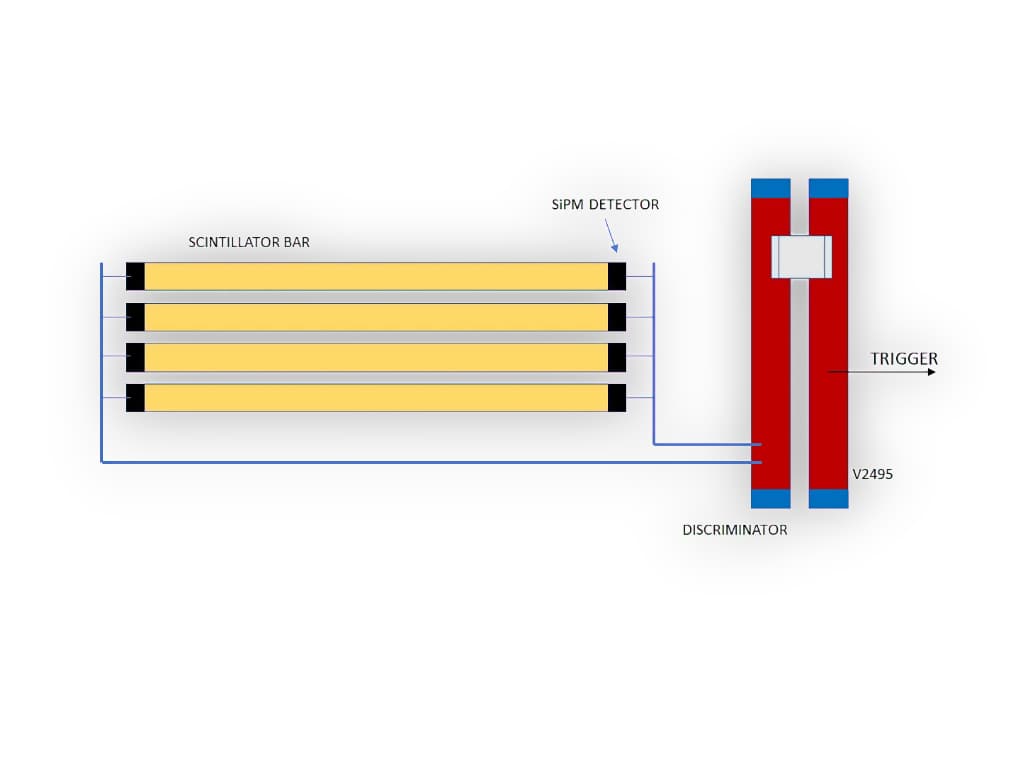
A discrete trigger circuit is a fundamental part of a large detector system used to reduce the readout data rate. The following trigger is based on scintillator bars coupled with SiPM detectors.
Read More +
A discrete trigger circuit is a fundamental part of a large detector system used to reduce the readout data rate. The following trigger is based on scintillator bars coupled with SiPM detectors.
Read More +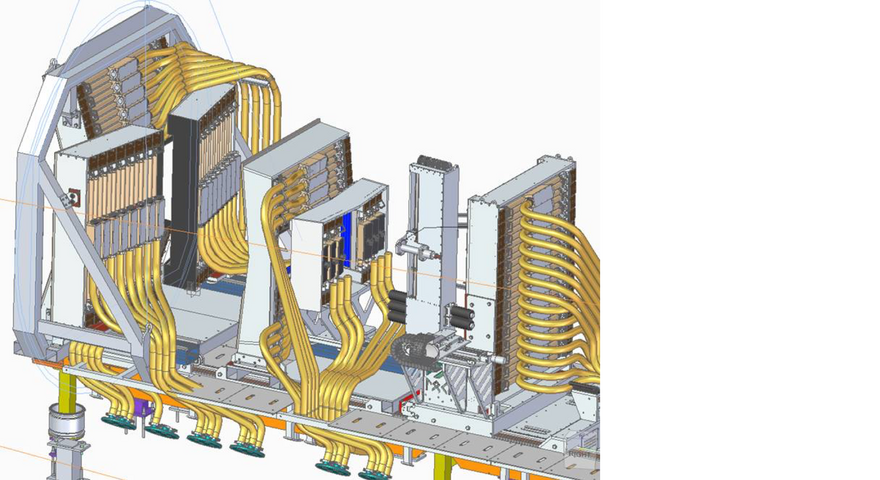
Introduction Loki Experiment is a new instrument at the European Spallation Source (ESS) in Lund, Sweden. It is a high-performance Small Angle Neutron Scattering (SANS) instrument that will provide a unique capability for the study of complex materials and biological systems.
Read More +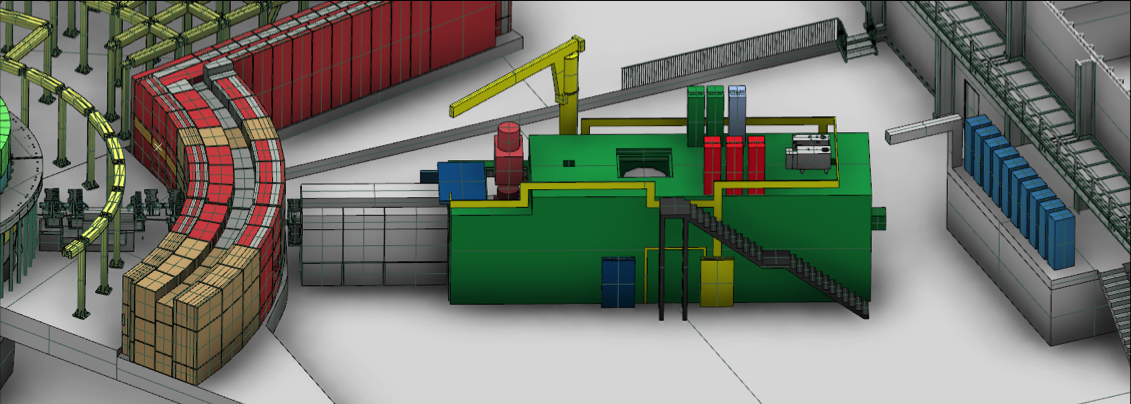
Small angle neutron scattering (SANS) is a technique that is applied across a spectrum of scientific disciplines, with users from chemistry, physics, biology, materials science, engineering and geoscience.
Read More +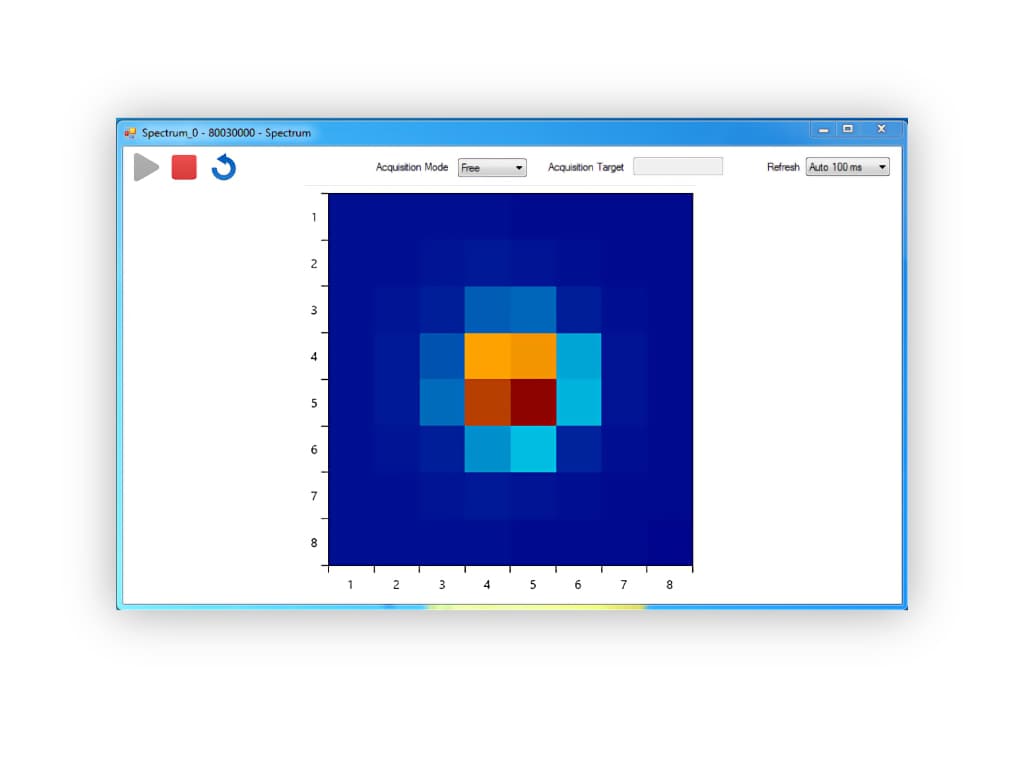
A very simple and inexpensive way to make an incident radiation 2D profile (like a beam profile) is to use a grid of scintillator.
Read More +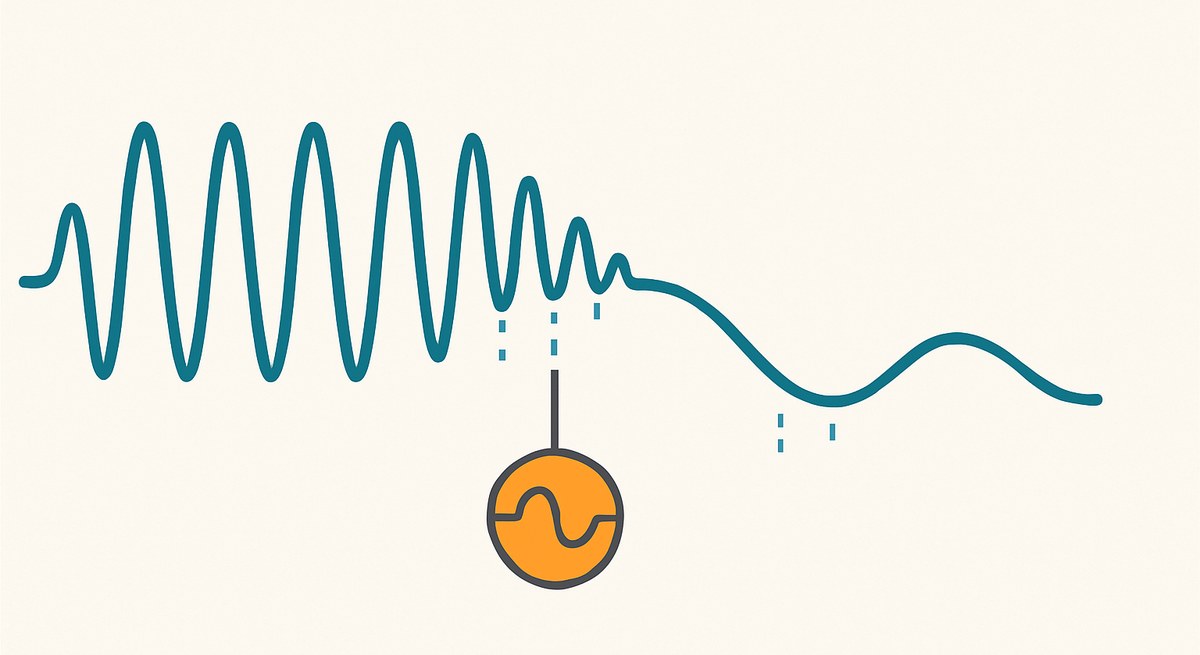
A large family of measurements does not deliver its information at DC. It arrives riding on a carrier: the free induction decay of an NMR or EPR experiment, the response of a resonant sensor driven at its resonance, the return of a swept optical or acoustic interrogator, the output of an RF front end.
Read More +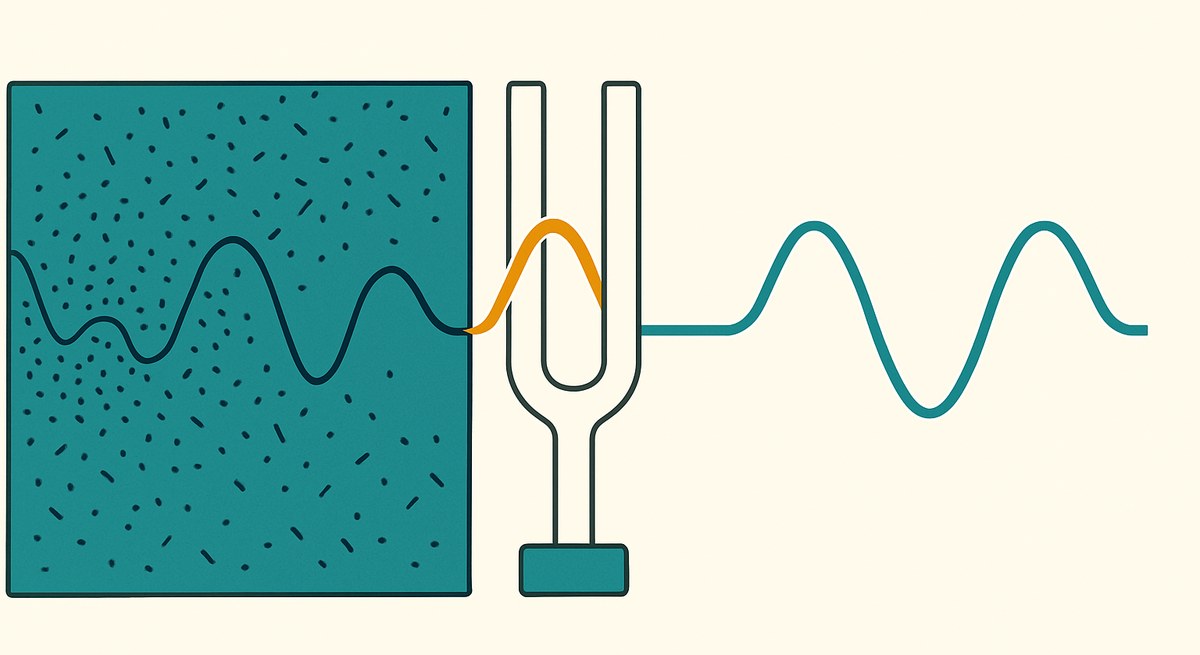
A lock-in amplifier is the standard answer to one specific problem: you have a signal you can modulate, and it is far smaller than the noise sitting on top of it.
Read More +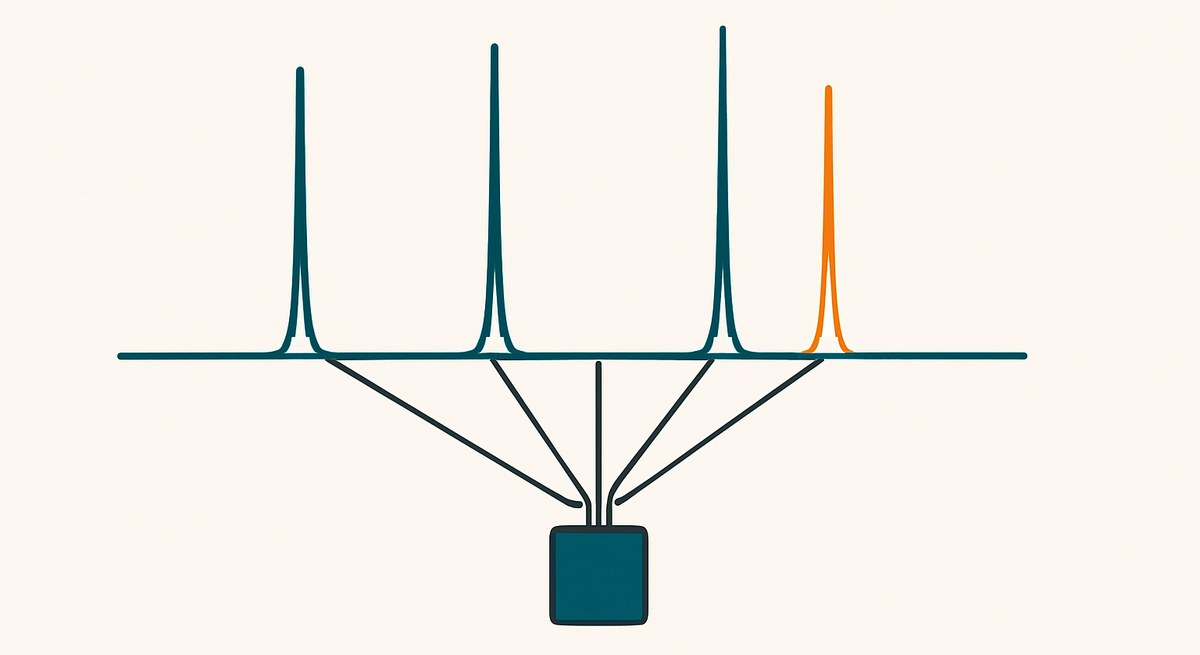
Electrochemical impedance spectroscopy measures a cell at a dozen or so discrete frequencies. A resonant sensor is interrogated at its resonance and at two points on the skirt.
Read More +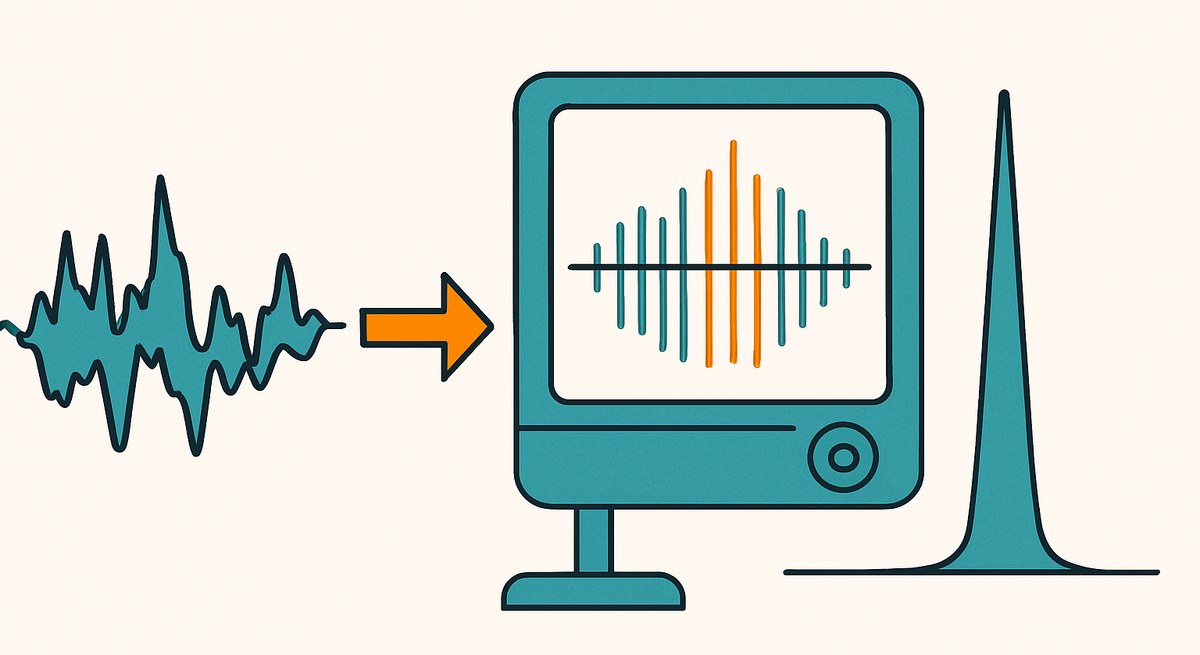
If you know the shape of the pulse you are looking for, the filter that maximises the signal-to-noise ratio at the moment of detection is the matched filter: correlate the incoming stream with a time-reversed copy of that shape.
Read More +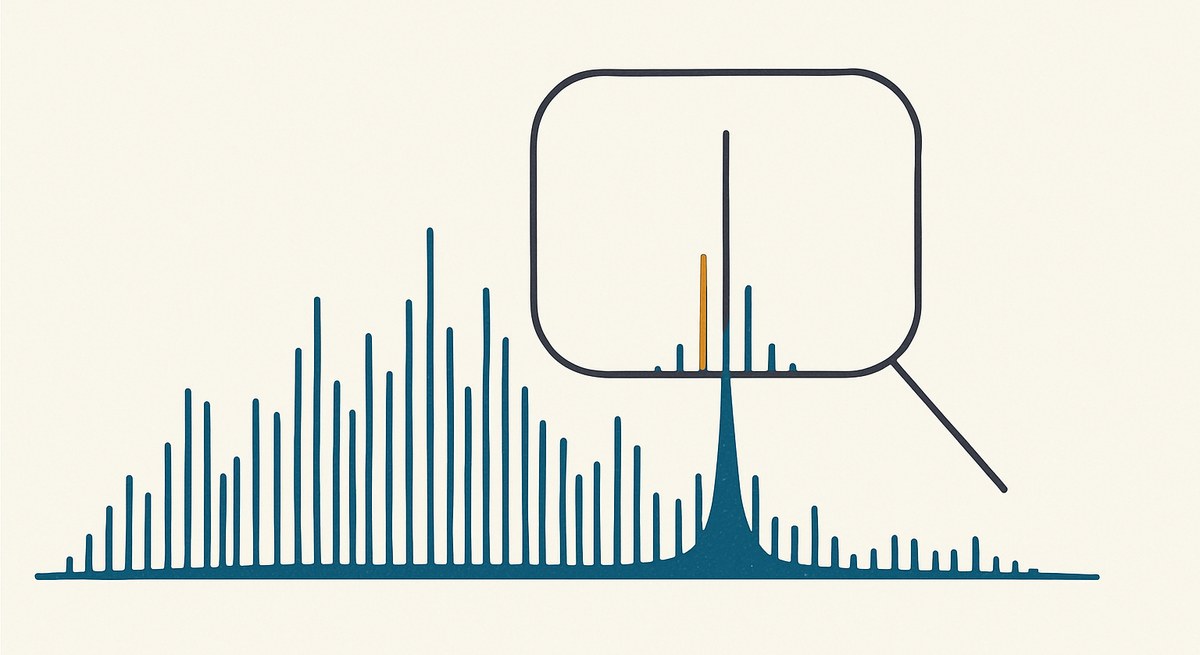
Some of the most useful measurements an instrument makes are not of the thing it was built to measure. A cryostat develops microphonics from a pump that was fine last month.
Read More +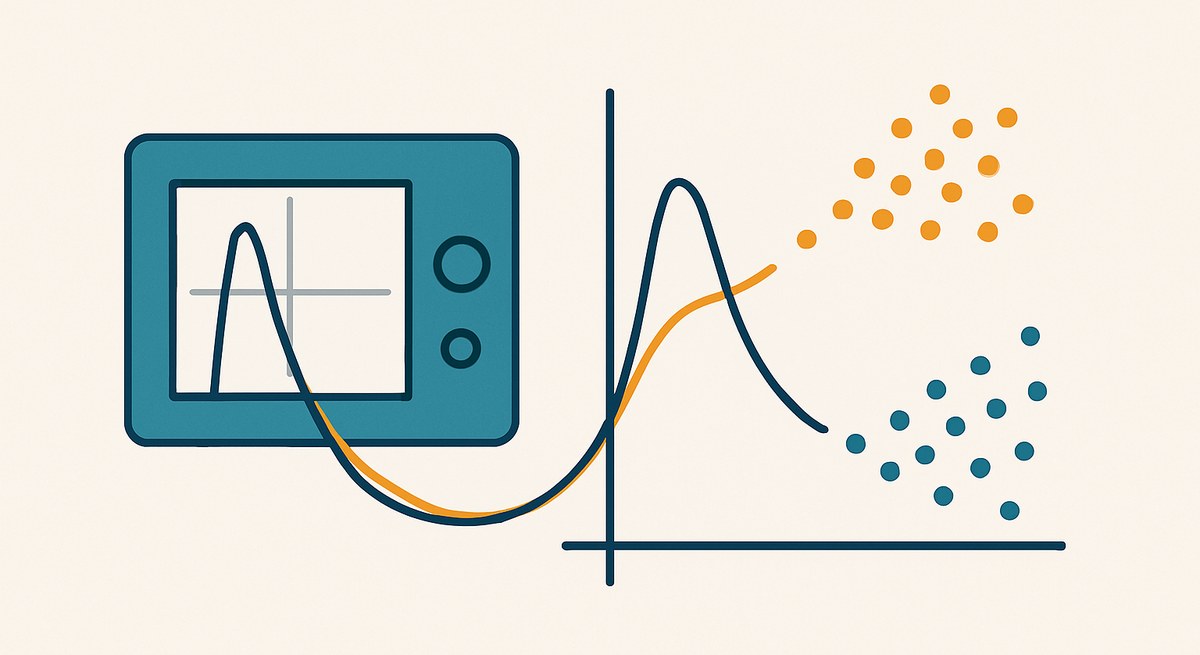
In an organic scintillator, a neutron and a gamma of the same deposited energy produce pulses of the same height. What differs is the shape: the neutron recoil populates triplet states that decay slowly, so its pulse carries a delayed tail the gamma does not have.
Read More +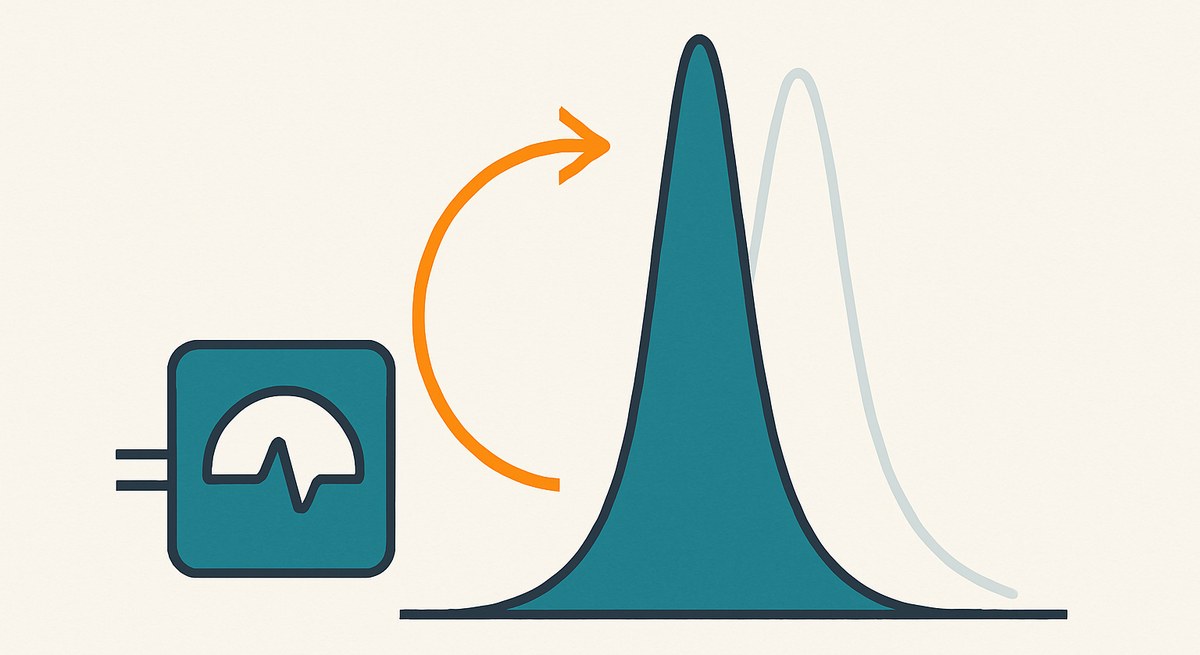
A silicon photomultiplier changes its gain by roughly one percent per degree. A photomultiplier tube drifts with supply, with count rate and with its own history.
Read More +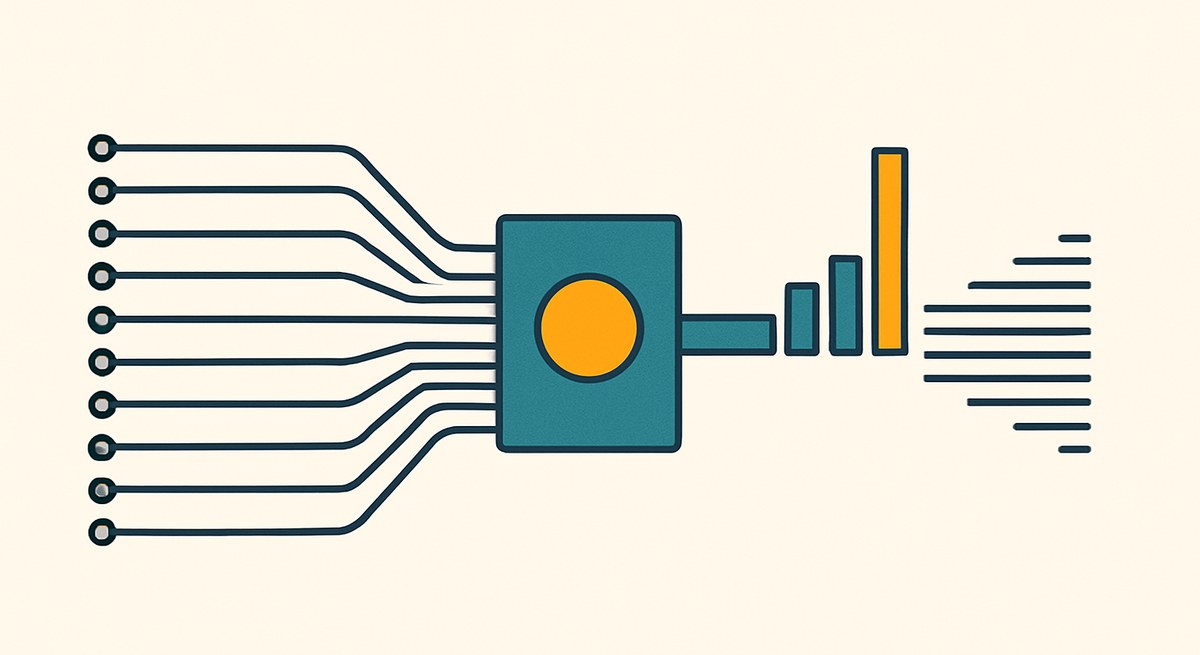
A 16-channel SiPM array, a multi-anode PMT, a strip detector, a segmented drift chamber. They all share a problem that a single-channel instrument does not have: at any moment, some channel is probably misbehaving, and nobody knows which.
Read More +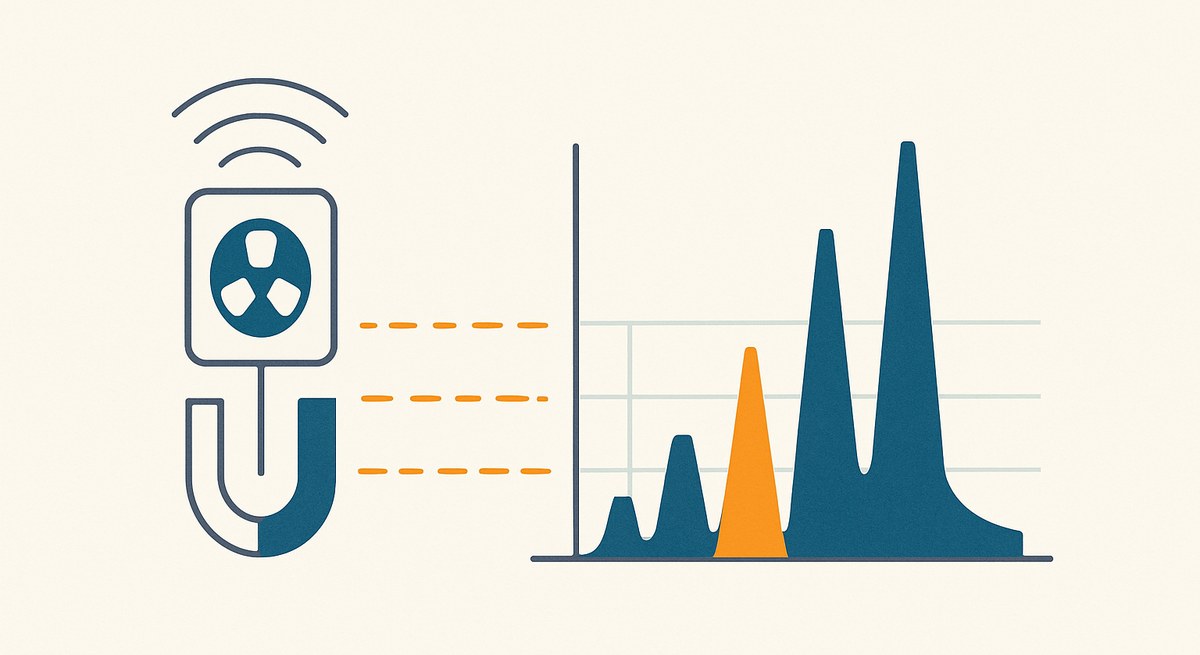
Testing a spectroscopy chain properly requires a detector, a source, a licence to hold the source, a room to hold it in, and hours of acquisition to get the statistics.
Read More +
Most detector systems need a set of digital signals to happen in a precise order, over and over. Configure an ASIC by clocking a shift register with the right chip-select framing.
Read More +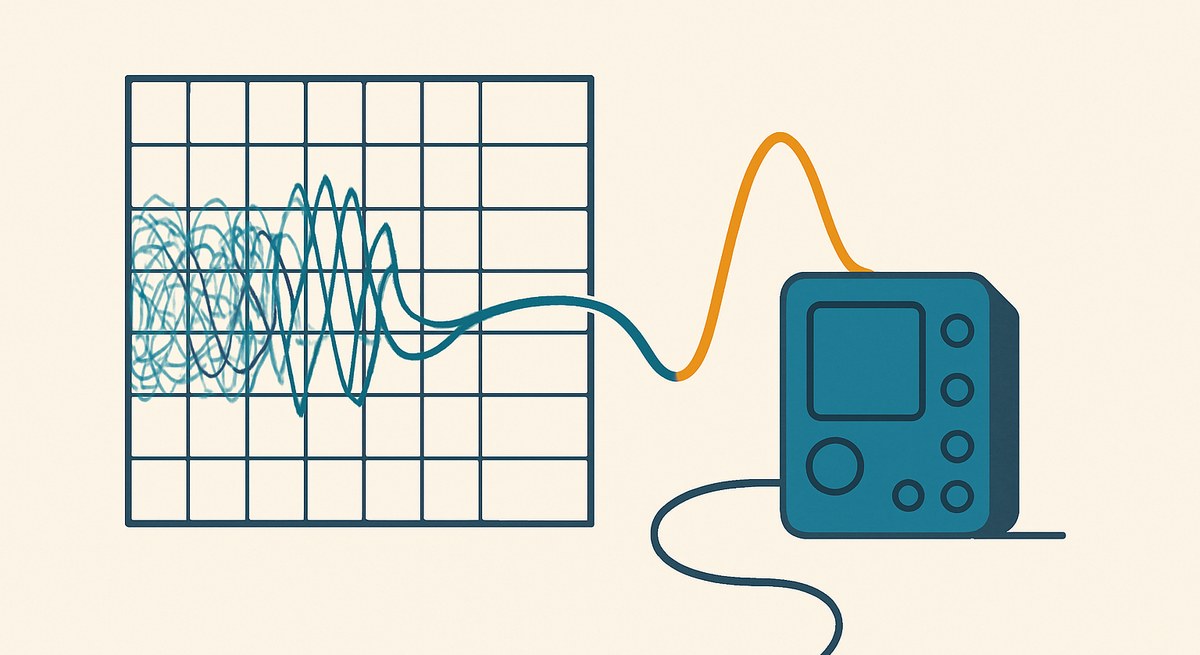
Whenever a measurement can be repeated on demand, averaging is the cheapest signal-to-noise ratio available. Pump-probe spectroscopy, time-of-flight measurement, LIDAR return profiling, ultrasound, laser-induced breakdown, and the routine business of extracting a detector’s pulse shape all share the same structure: fire something, capture the response, do it again.
Read More +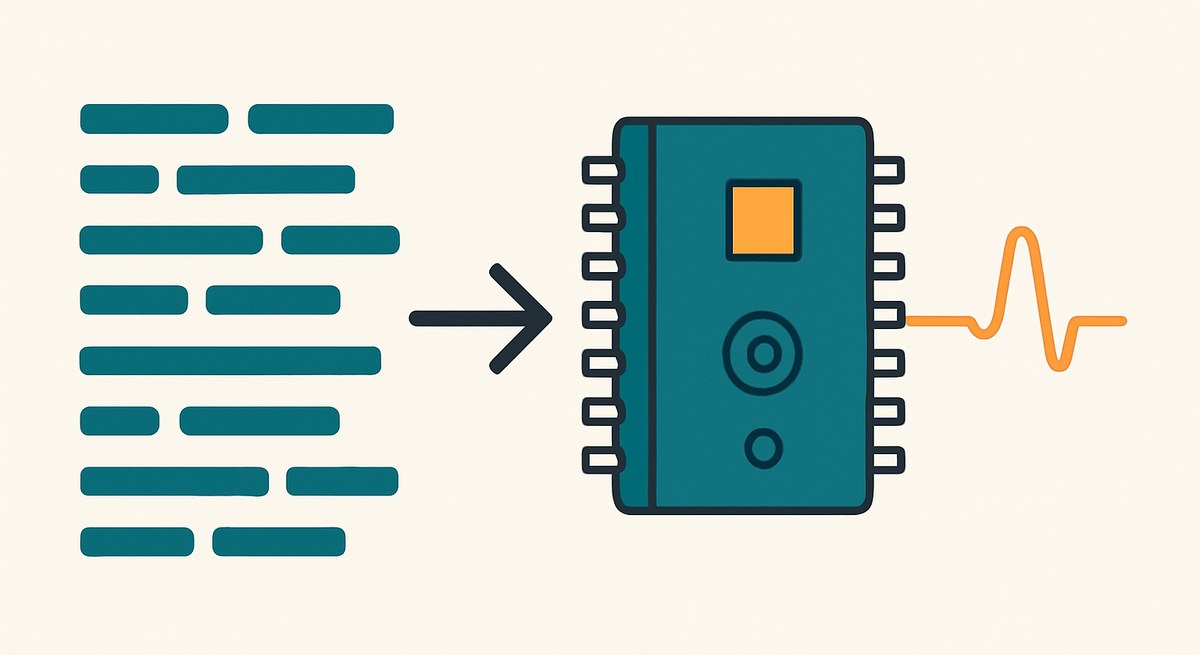
Most groups that would benefit from a graphical FPGA design tool already have VHDL. Often quite a lot of it: a detector interface written for a previous experiment, a serial protocol nobody wants to re-derive, a filter that took two people three months to get right, an algorithm that is the group’s actual intellectual contribution.
Read More +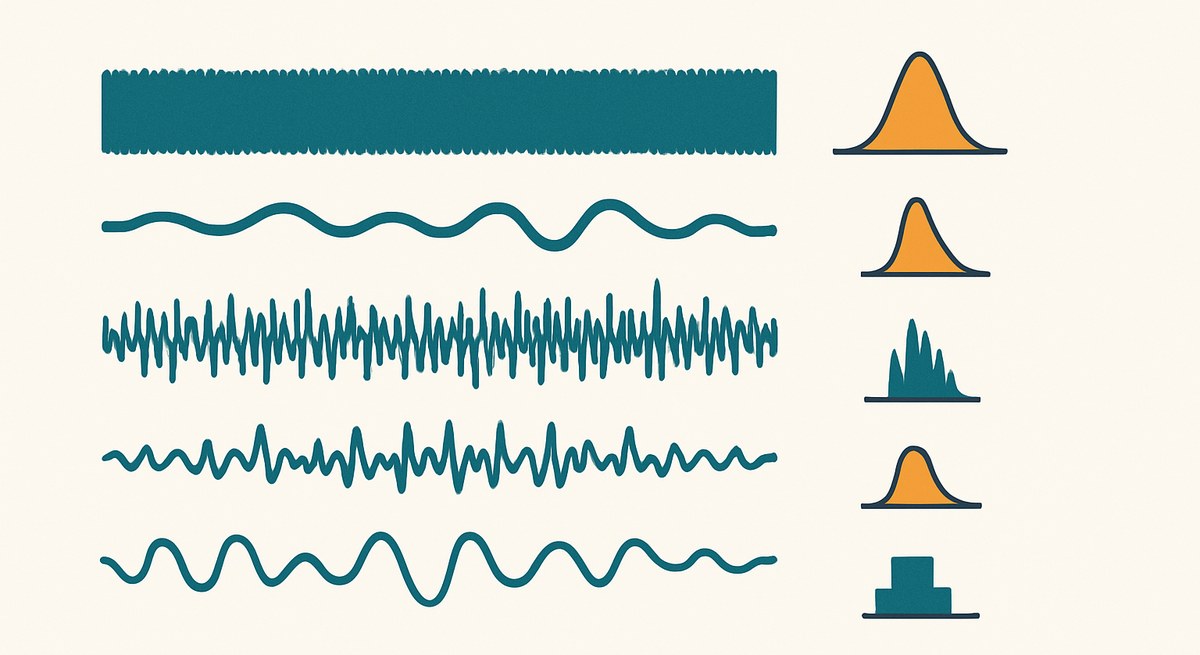
“Add some noise and see if it still works” is one of the most common things said about a signal-processing design, and one of the least precise.
Read More +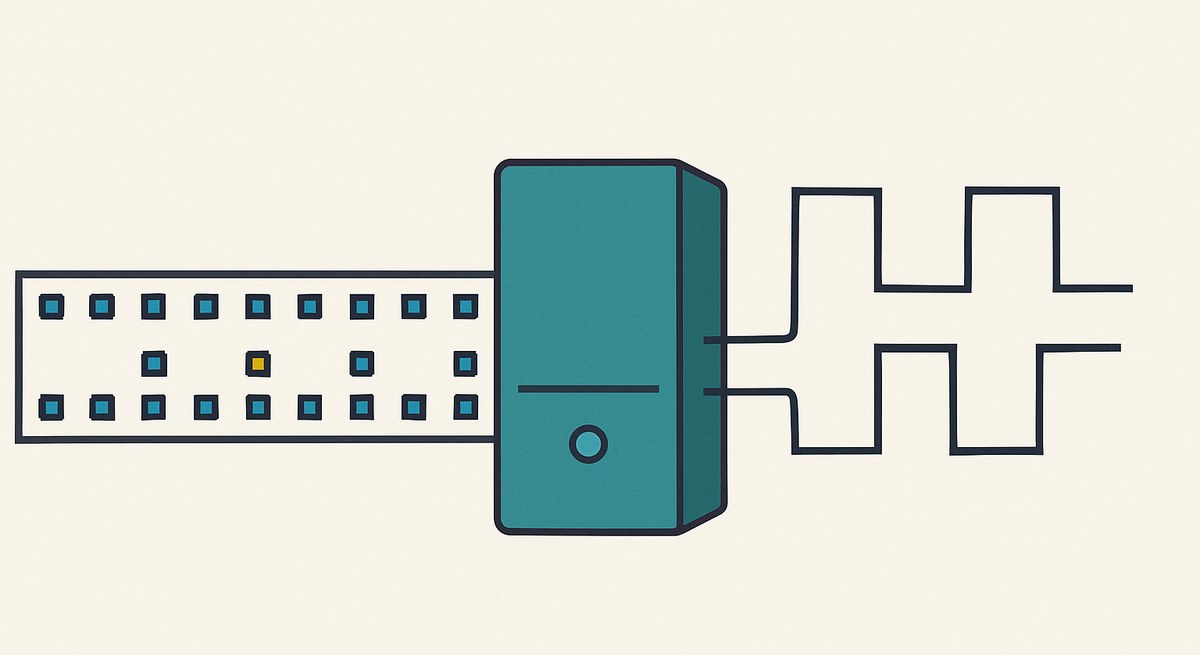
Firmware development almost never starts with all the hardware on the desk. The ADC daughterboard is six weeks out. The ASIC is in fabrication.
Read More +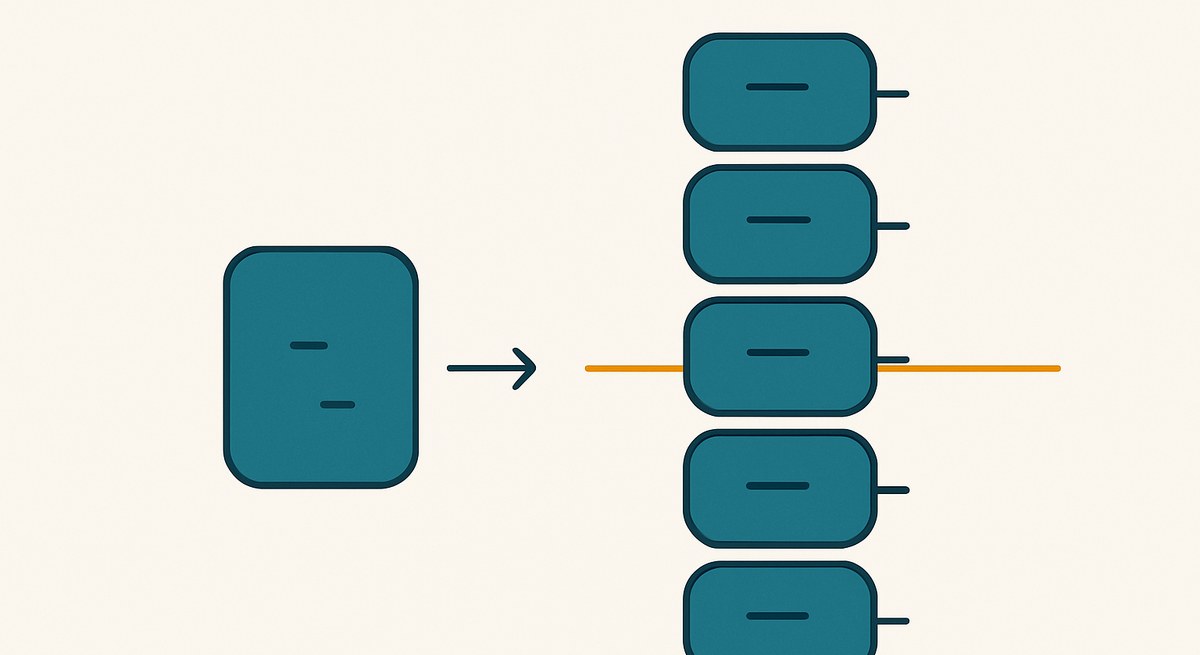
Almost every real experiment has more than one channel, and in almost every one of them the channels do the same thing.
Read More +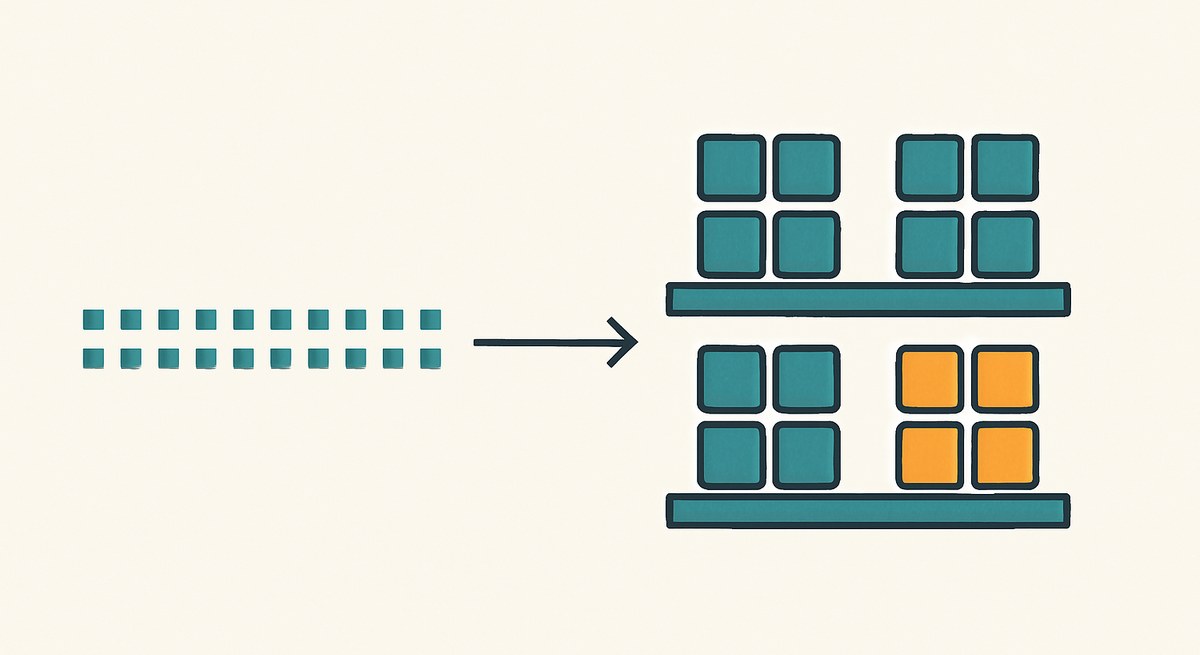
Every block in the Sci-Compiler library now exists in two versions, and the second one is marked TM. Understanding what that means takes about ten minutes and saves a great deal of confusion, because TM is one mechanism that solves two quite different problems, and the mechanism cannot tell you which of the two you are using it for.
Read More +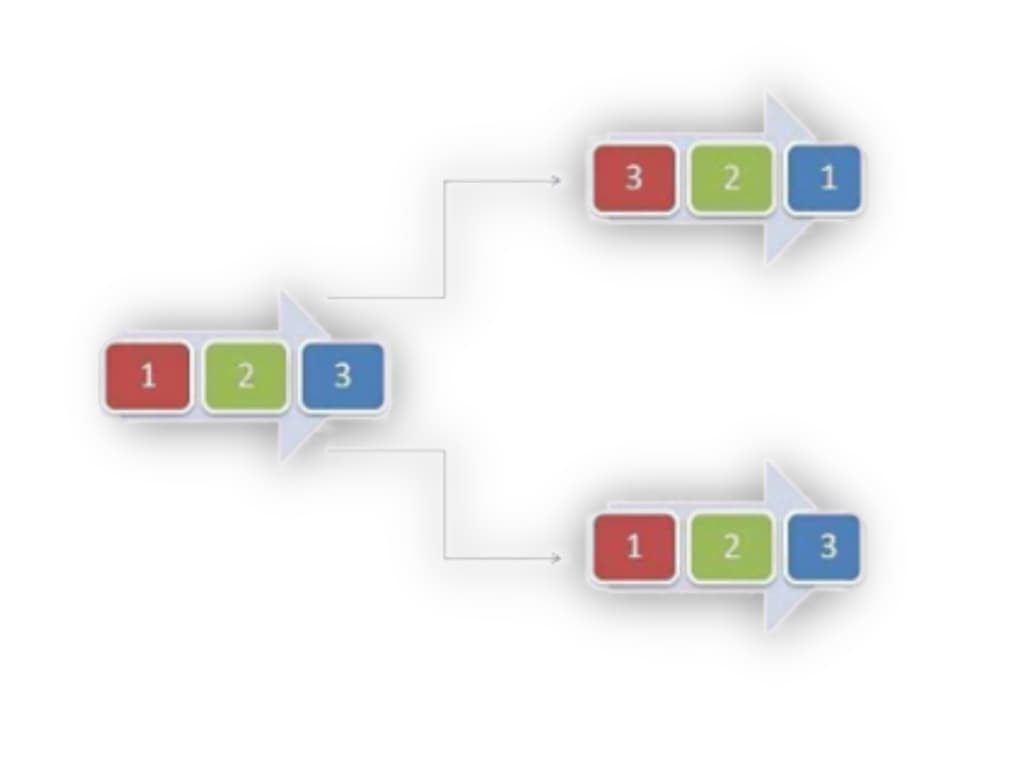
Sci-Compiler allows to easy implement FIFO communication to transfer formatted data, like list of en...
Read More +
A very simple and inexpensive way to make an incident radiation 2D profile (like a beam profile) is...
Read More +